Fast per stop
A short round can be twenty producers. A note that takes seconds, not a minute of writing, is the difference between finishing on time and finishing in the dark.
A clinical round is dozens of small producers in a day. A GP surgery, a dental practice, a care home, a vet, a pharmacy. The hazardous waste at each one needs its own consignment note. Consigns makes that note at the door, in seconds, and keeps it safe.
Built for the consignment note, not your bins. Your bag colours, sharps boxes and segregation stay exactly as they are. We lock down the bit that gets carriers fined. See how the digital note works.
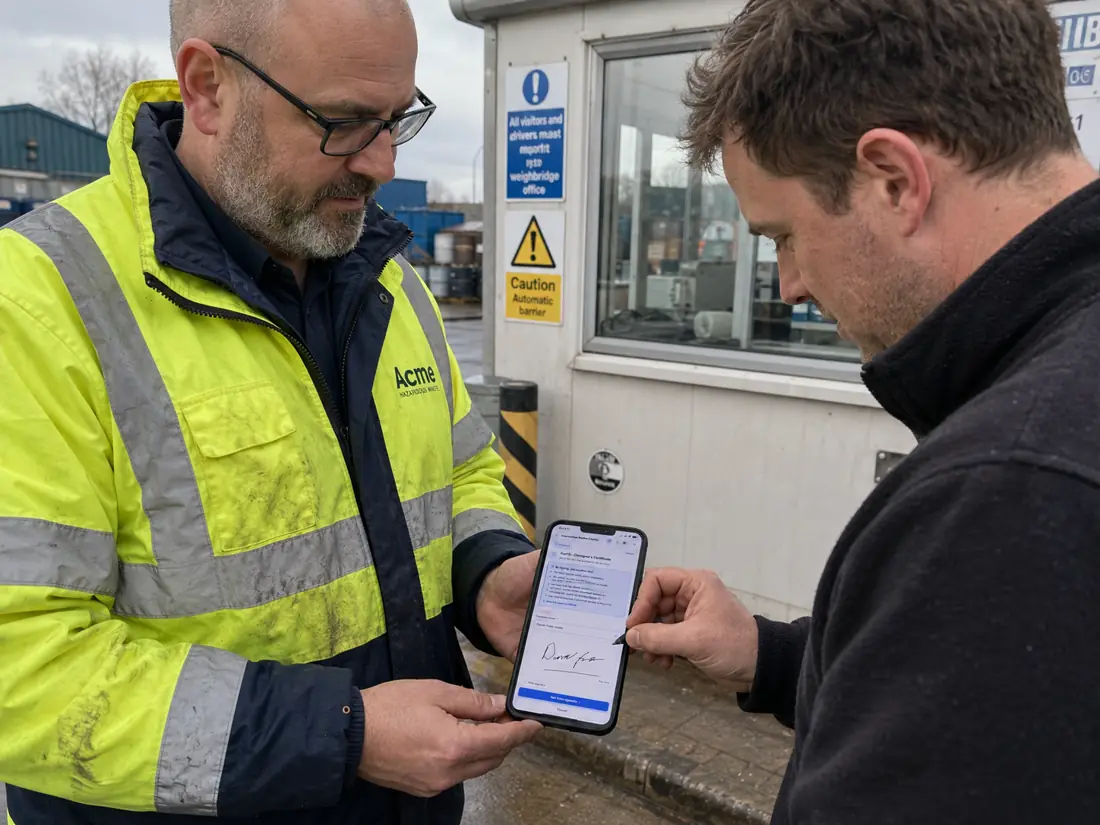
One stop at a time, the whole way down the list. Here is a single producer, start to finish, in the time it takes to swap a sharps bin.
Tap the next stop on today's round. The surgery's details, address and usual waste streams are already saved, so nothing is typed at the kerb.
Tick the streams collected and the number of bins or bags. The right EWC code is set for each one, so the description is correct every time.
The practice signs the note on the screen with a finger. No signal at the care home? It is captured anyway and syncs the moment you are back in range.
The finished note files itself against that producer, ready to find later. You drive on. Nothing is re-typed back at base that evening.
Twenty stops, twenty clean notes, and an empty out-tray when you park up.
Healthcare waste splits into hazardous and non-hazardous. Only the hazardous part needs a consignment note. The hazardous streams sit in chapter 18 of the waste list and are marked with a star. Consigns picks the right document for each one.
Full list and how to read a starred entry: the EWC code guide.
Yellow or orange stream. Hazardous, so it moves on a consignment note.
Purple-lidded stream. Hazardous, consignment note every time.
Laboratory and dental chemicals. Hazardous, consignment note.
From dental practices. Hazardous, consignment note.
Yellow-and-black "tiger" stream. Non-hazardous, so it travels on a waste transfer note instead.
A short round can be twenty producers. A note that takes seconds, not a minute of writing, is the difference between finishing on time and finishing in the dark.
Healthcare producers expect care with their paperwork. Each note is tied to one producer and one collection, so you can show the exact record when a practice or the Environment Agency asks.
Basements, rural care homes, lift lobbies. The collection app captures the note and signature offline, then syncs cleanly when you are back in range. The round never stops for a dead spot.
A hazardous clinical load in England and Wales moves on the HWCN01 consignment note. The producer keeps their copy for at least three years, the receiving site for at least five. Consigns holds every note from every stop for the full period, ready to pull up in seconds.
When a load reaches the receiving site, the receipt goes to DEFRA digital waste tracking for you. The service is live and phasing in, sites first, so a clinical fleet is ready before it is asked. Scotland treats these loads as special waste under SEPA; check the rule that applies to your collections.
Start the free trial and make real notes at real producers tomorrow morning. Nothing about your segregation or your depot has to change. You close the gap that catches clinical carriers out, and there is no demo to sit through first. Carry other waste too? See our hazardous waste carrier software.
Free for 14 days. Cancel any time before it renews.